19. 10. 2026
Author: Eva Nečasová
We have the technology. How can we ensure that it actually reaches people? The future of care was discussed in the Chamber of Deputies
How can we take assistive technologies from the development stage and bring them into the everyday lives of the people who need them? How can we remove the barriers to their implementation and create a system that promotes their accessibility? These were the very questions addressed at the round-table discussion ‘Care for the Future: How Can Assistive Technologies Help People?’, organised in the Chamber of Deputies of the Parliament of the Czech Republic by MP Hana Ančincová in collaboration with the Zlín Technology Innovation Centre.
The meeting brought together representatives from central government, regional authorities, research organisations, innovation agencies and social service providers. The common theme was not only the accessibility of modern technologies, but above all the creation of conditions for their safe, effective and long-term sustainable use in social and healthcare, as well as in everyday life.
From available technologies to their actual accessibility
One of the key messages to emerge from the discussion was that the mere existence of innovative solutions does not in itself mean that they will reach the people they can help.
Michaela Veselá Hiekischová from UJEP and the CESMOD project highlighted the need to create a comprehensive chain of accessibility for assistive technologies. This includes clear information, expert advice, clearly defined responsibilities, funding options and the integration of social and healthcare services. It is precisely the fragmentation of the system and the lack of awareness that currently represent significant barriers. The CESMOD project is therefore developing, amongst other things, information sheets on assistive technologies, which are intended to help both carers and professionals navigate the system.
Standardisation also plays a significant role. Vít Janovský from the Czech Technical University in Prague (ČVUT) presented work on assistive technology standards as part of the international TechSocialCare project. The aim is to draw on existing experience and best practice to ensure that the implementation of technologies is safe, of high quality and transferable between individual service providers. And we do need standards for assistive technologies.
The South Moravian Region demonstrated how to put innovation into practice
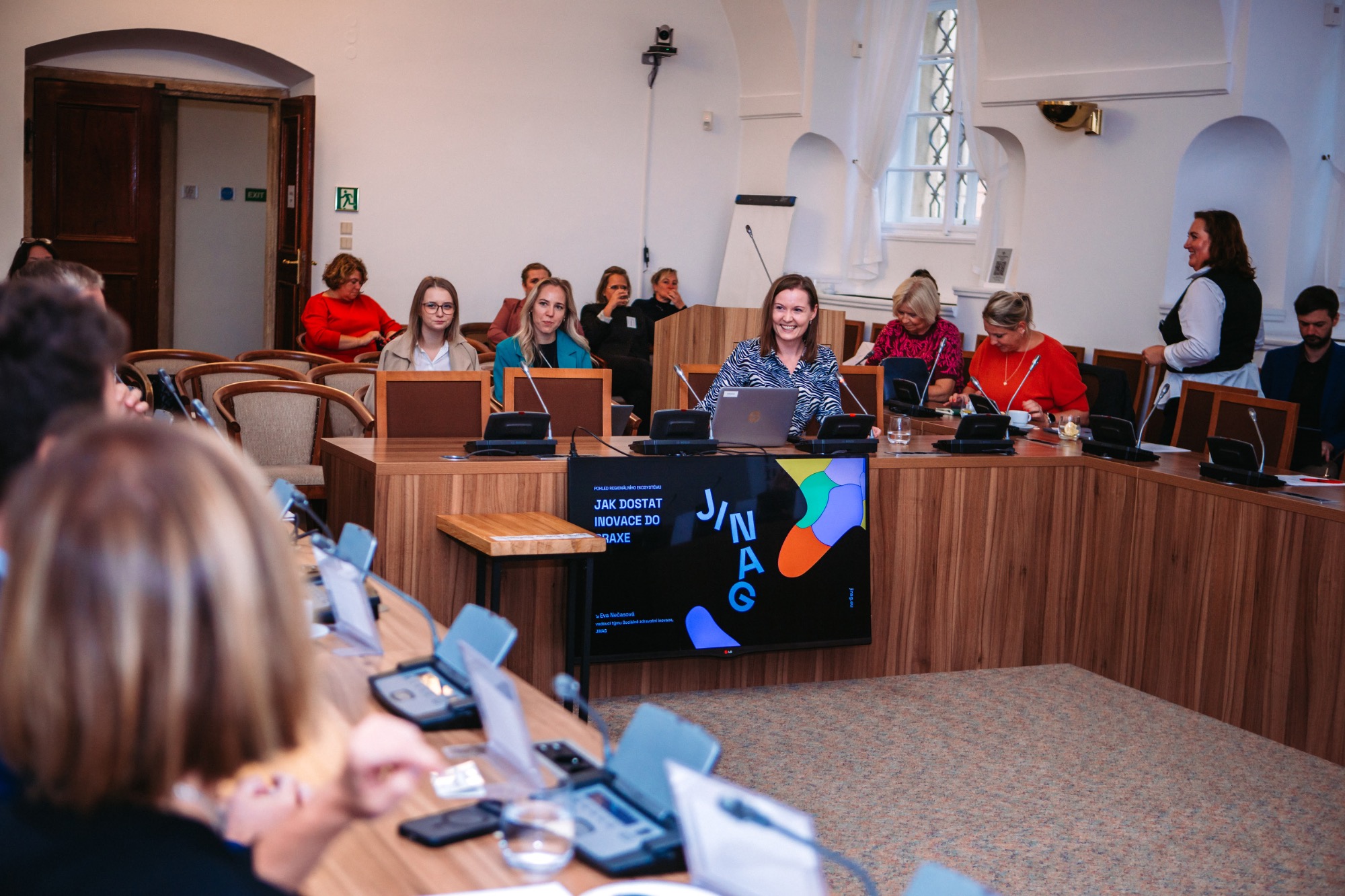
Speaking on behalf of the South Moravian Region, Eva Nečasová from JINAG shared the region’s experience in building a regional innovation ecosystem and supporting the introduction of assistive technologies into social and healthcare services.
A specific example was the ‘5G Telemedicine in Šebetov Social Services’ project, which combined modern connectivity, telemedicine and assistive technologies into a single functional system. The project demonstrated not only the potential of technological innovation, but also the importance of coordinating suppliers, engaging staff, overcoming technical and legislative barriers, and subsequently integrating technologies into day-to-day operations.
In this process, JINAG acts as an innovation facilitator, linking the needs of service providers with available technologies, research, and public administration.
Experience from the South Moravian Region confirms that the key to success lies not only in the technology itself, but also in having a partner capable of guiding organisations through the entire process, from identifying needs to the long-term practical implementation of solutions.
Inspiring examples from other regions
Representatives from the Liberec Region also highlighted practical applications of innovation. Jiří Vojtěch and Andrea Faltusová from the Regional Development Agency presented a pilot trial of Robic, a social AI robot that assists in working with clients on the autism spectrum and those with other specific needs. The project demonstrates the potential for using artificial intelligence to support communication, skills development, and therapeutic activities.
Šimon Přecechtěl from the Zlín Technology and Innovation Centre presented a plan for applied research focused on assistive technologies at the intersection of social and healthcare sectors. He emphasised the need to systematically evaluate not only the functionality of technologies, but also their actual social and economic impacts. It is precisely these measurable results that can serve as an important basis for decision-making regarding future investments and public support.
The future of care requires collaboration across the system
The round-table discussion showed that Czech regions already have a wealth of practical experience in the development, testing and implementation of assistive technologies. The challenge remains their systematic roll-out, accessible funding, methodological support and the creation of a stable legislative and organisational framework.
A major benefit of the meeting was the linking of practical experience from the regions with a discussion on systemic changes at the national level. Specific examples illustrate what is already working, where obstacles arise, and what support service providers and users themselves require.
We believe that the suggestions put forward in the Chamber of Deputies will contribute to the preparation of legislative and policy measures that will make assistive technology a common and accessible part of care.