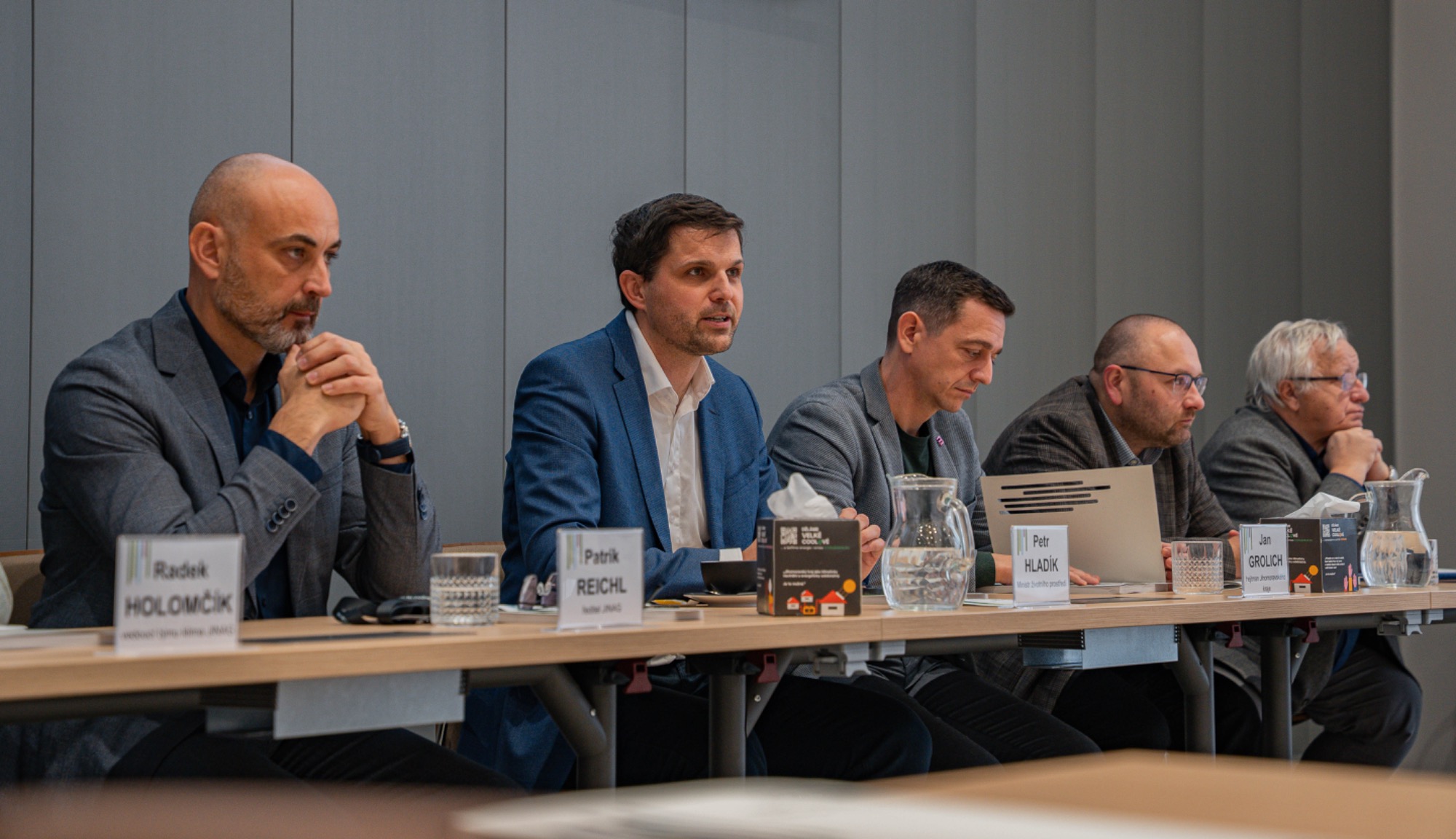
Brno, December 8 – Today, the South Moravian Region convened its first meeting of the Climate Council, a new advisory and strategic body that will play a key role in implementing the Climate Action Plan (CAP). The plan was approved by the regional council in September 2024 and represents a comprehensive strategy to prepare the region for climate change by 2050 – from energy and adaptation to landscape and mobility, to health, education, and cooperation with municipalities.
The Climate Council was established on the basis of the Zero Update to the CAP from 2025, which set up a new management structure. This includes the CAP manager, a coordination group, and an expert panel composed of specialist working teams. The Council links scientific knowledge, practice, municipal needs, and the region's strategic priorities. Its members include representatives of the region, municipalities, scientific institutions, universities, regional organizations, the non-profit sector, and the South Moravian Agency for Public Innovation (JINAG), which coordinates the process.
"Climate change is increasingly affecting our lives, and the South Moravian Region is one of the most affected. That is why it is necessary to take action – to protect water and soil, bring life back to the countryside, and adapt cities to overheating. At the Ministry of the Environment, we have therefore approved an anti-erosion decree this year that will help better protect the soil from water and wind erosion. In South Moravia, it is essential to implement windbreaks to prevent wind erosion, which are also regulated by the decree. We have also declared the Soutok Protected Landscape Area, which played a key role during last year's floods. Landscape features such as trees, hedgerows, and copses are also important because they retain water, increase soil resilience, promote biodiversity, and mitigate the effects of climate change. That is why we have made it easier to plant them and to plant trees along roadsides. I am glad that the South Moravian Region was the first to establish a Climate Council, which addresses the specific impacts of climate change in the region and can thus respond effectively to local conditions," said Petr Hladík (KDU-ČSL), Minister of the Environment in resignation.
The Climate Action Plan was developed at the turn of 2023 and 2024 with the participation of more than 70 experts and hundreds of stakeholders from the public and institutional sectors. It sets out three main long-term visions:
- a healthy and resilient landscape,
- sustainable and livable settlements,
- carbon-neutral energy and mobility.
For the period 2025–2030, it sets specific priorities, such as the development of renewable energy sources, the renovation of public buildings, water retention in the landscape, and the adaptation of cities to overheating.
"The Climate Council will help us ensure that the plan does not remain on paper, but is transformed into specific projects in municipalities, cities, and the countryside. We are doing this so that the landscape of South Moravia remains healthy and resilient—as we know and love it—and so that it will still be a good place to live in decades to come," said Jan Grolich, Governor of the South Moravian Region.
Regional Councilor for the Environment Karel Podzimek adds, "Climate change is already affecting water management, agriculture, and quality of life in our communities. That is why it is crucial that we plan measures based on data and in collaboration with experts and mayors. The Climate Council will enable us to move forward more quickly with projects that will improve water management, strengthen the resilience of the landscape, and help people directly in the field."
The new KAP management structure is based on the principle of "cooperative management" rather than a directive approach. "We don't want to dictate anything to municipalities and partners from above. On the contrary, we want to work with them and find solutions together. The region will not just be the one who says what and how, but mainly the one who helps put things together and takes responsibility for them together with others," adds Deputy Governor Jan Zámečník.
The first meeting of the Climate Council was devoted to defining the roles of individual actors, the priorities of the first implementation cycle, and the preparation of the LIFE Strategic Integrated Project, which the region and JINAG are preparing to submit. The project should significantly support the implementation of the CAP in 2027–2036.
"The South Moravian Region is the first in the country to decide to adopt a climate policy on such a broad and practical scale. We don't want to create more documents, but to implement measures that have a real impact on people and the region," says Patrik Reichl, director of JINAG, which is coordinating the entire process.
South Moravia is one of the regions most affected by climate change. Moreover, climate predictions confirm that conditions will continue to deteriorate until 2050.
"As the warmest and driest region in the Czech Republic, South Moravia is already feeling the effects of climate change significantly – from rising temperatures and longer periods of drought to more frequent extreme weather events. Our latest predictions show that the number of tropical days could exceed 50 per year by the middle of the century, while available water resources will continue to decline. These trends confirm the need for a systematic and long-term approach. CzechGlobe therefore provides the region with data and analyses that help to propose effective and scientifically based solutions," said Michal V. Marek, director of CzechGlobe.
This is one of the reasons the region is moving from preparing documents to systematically implementing measures that will bring about concrete changes in the landscape, municipalities, and residents' everyday lives.
These factors are already affecting the quality of life of residents, agricultural production, water management, and the condition of forests, and are therefore one of the main reasons why the region is moving from preparing documents to systematically implementing measures that will bring about concrete changes in the landscape, municipalities, and the daily lives of residents.
Press release available for download here.
Contact person:
Zuzana Novotná, Team Leader and PR Manager
e-mail: zuzana.novotna@jinag.eu
tel.: 608 959 044