21. 10. 2024
Author: Zuzana Novotná
How to use AI to choose the right health or social services?
In social and health care, we focus on connecting innovation, technology, and services to support the residents of the South Moravian Region. The main goal is to increase the accessibility and efficiency of healthcare through technologies such as assistive technologies or artificial intelligence.
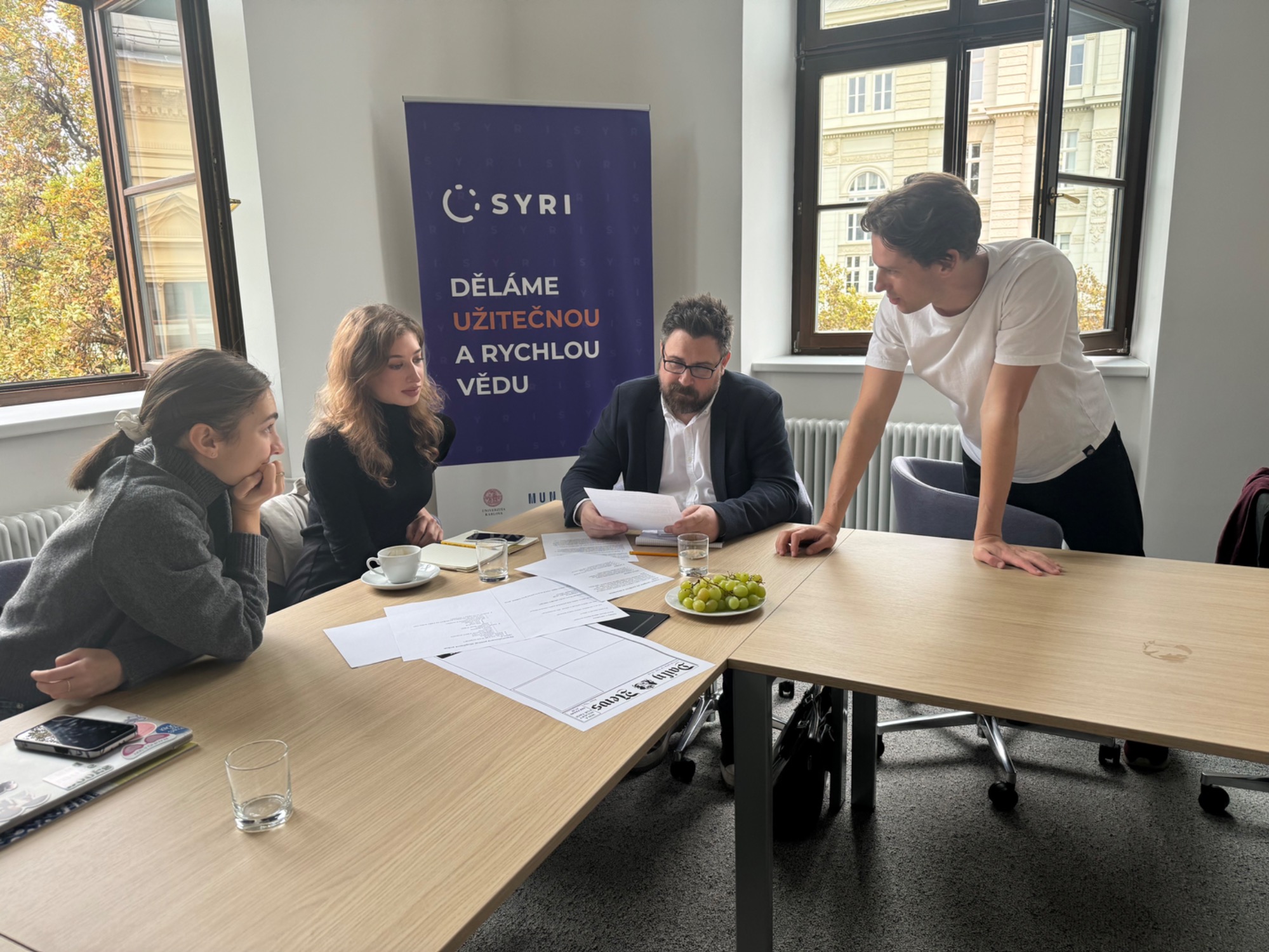
Therefore, within the framework of the Brno AI Days, we organized a workshop titled "AI as your guide through the social and health labyrinth." The aim of the workshop was to find ways to effectively use AI in navigating the system of social and health services. The workshop took place on 17 October 2024 at SYRI premises on Komenský náměstí in Brno.
The event was opened by Professor Andrea Pokorná, Vice Dean for Non-Medical Degree Programmes and Information Technology of the Faculty of Medicine, referring to the Plain Language Recommendations project, which focuses on the creation of lay health recommendation methodologies for different target groups, and naming the important role and potential of AI in increasing awareness of available services and the overall clarity of the entire social and health system.
First, we provided the participants with the necessary context for the Access 4 All project. It aims to look for ways to increase the awareness of the South Moravian Region's residents about the services available in the social and health ecosystem. One of the key challenges faced by the population is the complexity of this system. It is not easy to find a satisfactory answer to the question "What should I do if ... ?" in situations where people are dealing with problems falling within the social or health sphere.
In the second part of the workshop, we brainstormed possible solutions to the challenge "How could we use AI to create a smart assistant for finding health and social services?" in smaller groups. Each group included representatives from both the service and technology sectors. This mix allowed us to bring a comprehensive view of the shape of possible tools that answer the challenge. Throughout the work, we used methods such as Crazy 8s or Cover story to kick-start the creative process.
In the process, we have confirmed that developing tools for navigating service networks based on artificial intelligence (AI) or large language models (LLM) makes sense and is feasible. We agreed that it is important to follow a few basic rules when developing such a tool.
The first is to ensure reliable and trustworthy data from service providers, as the quality of the output is dependent on the quality of the input data. Next, it is essential to take into account the importance of human interaction, as trust in AI-based tools in health is not entirely high, as recent SYRI research has shown. Credibility can be increased by adding human support when technical solutions hit their limits.
Another important feature is the intuitive interface. The ease of use of the tool plays a key role in its successful adoption. A simple interface such as Google's can be an inspiration. Strong brand identity and familiarity also contribute to successful adoption. It is important to get the tool into the public domain so that people know that it is 'the' tool that can help. Examples of similar tools include 112, the Záchranka app, and the Jenda portal.
The first step in developing such a tool should be to define a pilot solution a minimum viable product (MVP) or an initial version with the smallest possible set of features. It is important to clearly define a priority set of topics on which we want to start building the tool and to continuously add to it based on the needs of users that are continuously identified.
The workshop was held under the umbrella of AI Days in collaboration with MED MUNI, KISK, and SYRI National Institute for Research on Socioeconomic Impact of Diseases and Systemic Risks.