12. 12. 2025
Author: Nela Kadlečíková
How can municipalities finance a sustainable future in a smart way?
In the coming years, European regions face a huge challenge: how to finance and implement infrastructure that not only reduces emissions but also withstands rapidly changing climate conditions? This is precisely what the international GreenGov project addresses. It connects regions and experts across Europe and helps public administrations navigate the increasingly complex world of green financing—that is, financing projects in line with sustainability and environmental standards set by European legislation.
The project was launched with a clear goal: to help municipalities, cities, and regions better prepare, evaluate, and finance projects that meet European climate and environmental requirements while also making economic sense. Among other things, the project will produce a practical guide to green financing, intended primarily for smaller local governments.
A smart investment today = savings tomorrow
These days, it’s no longer enough for a project to simply meet budgetary requirements. European funds and national grant programs increasingly require that investments not harm the environment, be resilient to future impacts of climate change, and comply with the EU’s sustainable investment taxonomy.
This means that projects must be assessed much more comprehensively today than in the past. It is not just about the cost of construction, but also about whether a building can withstand heat waves, whether a road can withstand torrential rains, and whether an energy investment actually reduces emissions and does not cause other environmental damage.
The Three Pillars That Determine the Success of Projects Today
The GreenGov project focuses on three key aspects of European regulation that fundamentally influence public investment today:
1) DNSH – “Do No Significant Harm”
Every project must demonstrate that it does not harm the climate, water, nature, or air quality. In other words, you cannot solve one problem while making another worse.
Every project must demonstrate that it does not harm the climate, water, nature, or air quality. In other words, you cannot solve one problem while making another worse.
2) Climate proofing
This ensures that projects will be functional not only today but also in 2050. It assesses the impacts of extreme temperatures, droughts, floods, and strong winds.
This ensures that projects will be functional not only today but also in 2050. It assesses the impacts of extreme temperatures, droughts, floods, and strong winds.
3) EU taxonomy
A unified European “sustainability dictionary” that defines what constitutes a truly green investment and what does not. Thanks to it, municipalities and investors have clear and comparable rules.
A unified European “sustainability dictionary” that defines what constitutes a truly green investment and what does not. Thanks to it, municipalities and investors have clear and comparable rules.
To make these often complex rules more understandable for local governments, the GreenGov project also produced Czech thematic overviews on the DNSH principle and climate proofing. They offer practical explanations, specific impacts on project preparation, and recommendations for practical implementation.
The overviews are available here:
From Rules to Funding: Phase Two of the Project
Phase two of the project focuses on practical financing options for sustainable projects:
- Green Budgeting – a method that shows how much money is actually allocated to sustainable goals and how to align the budget with climate strategies.
- Green Bonds – a modern tool for securing favorable financing for energy savings, renewable energy, or adaptation projects
- Green investment instruments – preferential loans, funds, guarantees, or revolving funds that reduce risks for municipalities.
These tools are already being successfully used by cities in Italy and France. And it is precisely their experiences that are being transferred to the Czech context as part of the project.
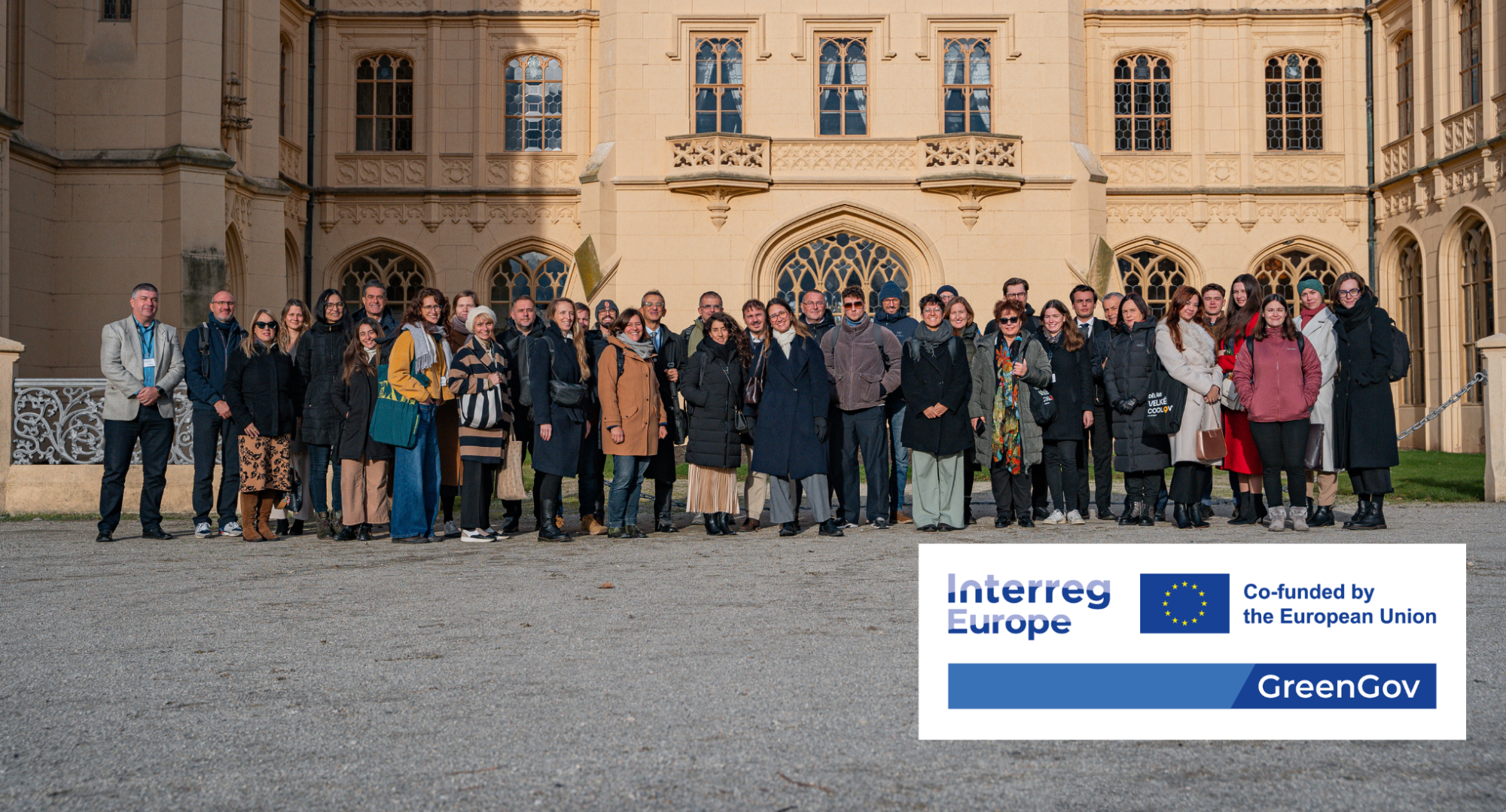
An important milestone for the project was the international meeting in Lednice last November, where our partners and I focused primarily on green budgeting. It was confirmed that
- Systematic management of public finances is key to implementing climate strategies,
- Sustainability must be an integral part of strategic documents, not just a formal appendix,
- Sharing best practices significantly accelerates the implementation of changes in regions.
The program also included a practical workshop focused on how to specifically incorporate these topics into municipal and regional planning.
What does this mean for Czech municipalities and mayors?
The GreenGov project sends a clear message:
- Sustainable infrastructure is not a luxury. It is a necessity.
- Green financing is no longer just a topic for Brussels, but an everyday reality for projects.
- Municipalities that prepare for the new conditions in time will gain an advantage—both financial and strategic.
Thanks to GreenGov, local governments will have access to the following by 2028:
- clear guidelines,
- practical methodologies,
- international know-how,
- and specific financial tools to actually implement their plans.
You can find more about the project here: https://jinag.eu/en/greengov-project-a-guide-to-green-finance