When we talk to mayors and officials in municipalities, we hear similar phrases over and over again: "We have ideas, but we don't have the capacity," "We would like to digitize, but we're afraid it won't go through," or "Subsidies exist, you just have to know how to navigate them." The desire to move the municipality forward is there. However, the reality of day-to-day operations often pushes innovation to the sidelines. Legislative complexity, staff shortages, limited budgets, and fear of risk are holding back even municipalities that would otherwise like to be modern, efficient, and open to their citizens. And this is precisely the reality we encounter in the field.
What research says: barriers and drivers of innovation in municipalities
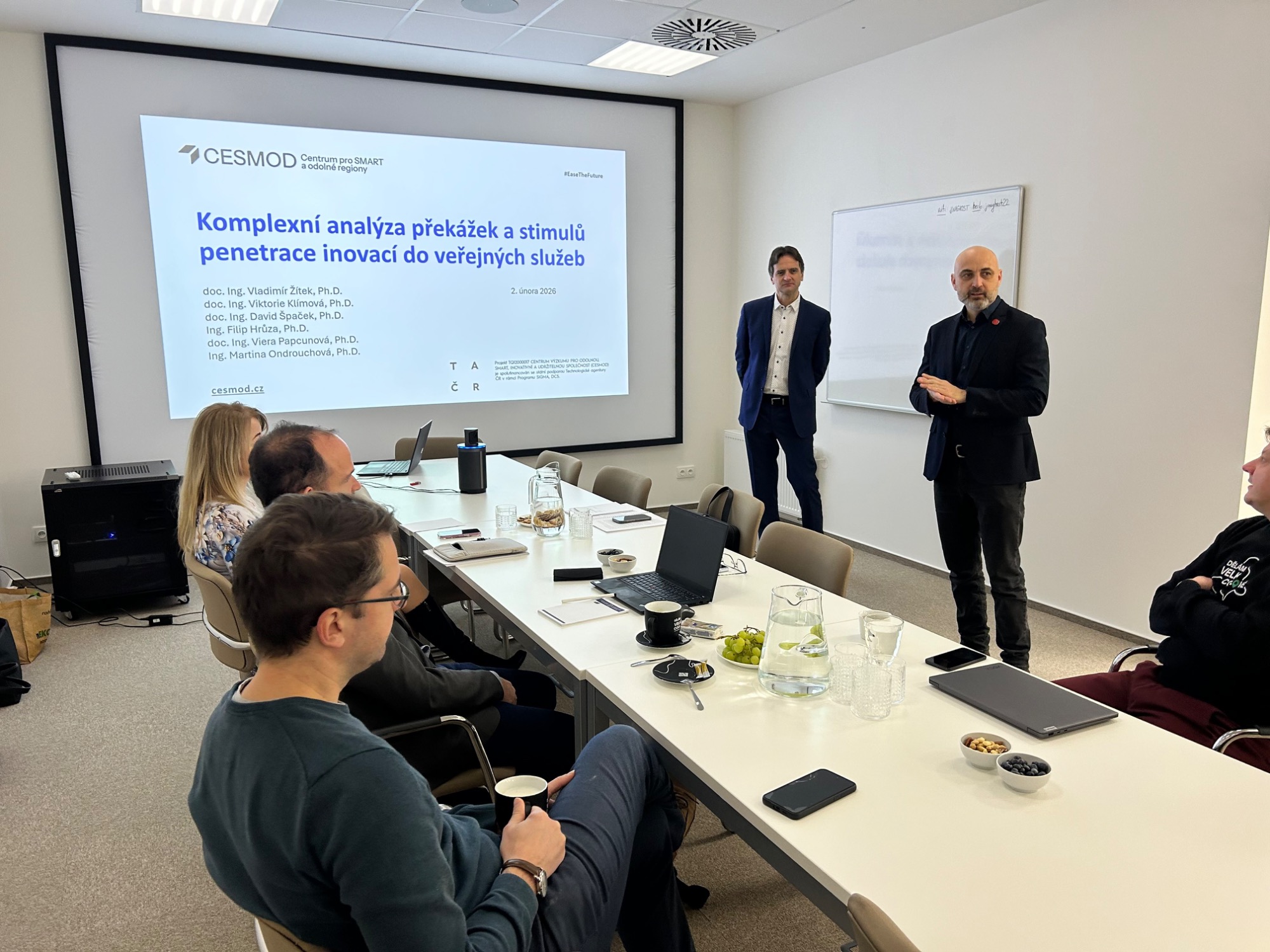
Our experience has been confirmed by an expert study conducted as part of the CESMOD project, which identifies the main barriers and drivers for the introduction of innovation in municipalities.
Innovation in municipalities today takes place in practical areas of everyday life. Communication with citizens, digitization of public offices, energy savings, safer transport, modern schools, and public involvement in decision-making are all part of real projects today. We see municipalities introducing communication applications, digital radio and video news, digitizing agendas, councils, and official notice boards, investing in photovoltaics and energy management, engaging citizens through participatory budgets and feedback, or increasing safety through smart transport solutions. However, even good ideas often run up against legislation, finances, or the authorities' capacity.
The problem is not technology, but the system
Experience in the field shows that the main obstacles are not technology, but the system. Complex legislation and administration, a lack of people with the necessary knowledge, limited finances, fear of mistakes and risks, and a conservative environment prevent municipalities from realizing their ambitions. As a result, many good ideas remain on paper, even though they could bring real improvements. Nevertheless, the potential is enormous. When innovation succeeds, the benefits are clear: savings in time and money, simpler work for the authorities, more satisfied citizens, and greater public confidence. One successful change often paves the way for others. That is why it makes sense not to postpone innovation, but to implement it systematically and with support.
What supports the introduction of innovation in public administration
Innovation in public administration does not happen on its own or solely thanks to technology. Support from management plays a key role by prioritizing innovation, creating space for it, and reducing concerns about risk. Without a clear signal from above, even good ideas often remain only on paper. People and their skills are equally important. Continuous education, the development of innovative skills, and a culture that encourages experimentation significantly increase the likelihood that new approaches will take hold in practice.
Accessible and flexible financing is also a key stimulus. Dedicated funds for innovation and the possibility of pilot testing give authorities the certainty that innovation is not a one-off gamble, but a controlled process. Innovation is also supported by an appropriately designed legislative and methodological framework that allows new procedures to be tested and simplifies internal rules. Where rules allow room for experimentation, more functional solutions emerge.
Innovation is significantly more successful where authorities do not rely solely on themselves. Cooperation with other municipalities, regions, universities, the non-profit sector, or companies brings new ideas, know-how, and capacity. Innovation intermediaries also play an important role here—regional agencies, innovation centers, or innovation brokers who help translate new ideas into real-world public administration practice.
JINAG as a practical partner for municipalities
JINAG supports municipalities in implementing innovations as a long-term partner, not as a supplier of one-off solutions. We accompany the entire process – from the idea through orientation on possibilities and financing to the implementation and evaluation of projects. Support is always tailored to the municipality's real capacities and needs.
The basis is expert consultations that help municipalities identify problems, evaluate opportunities, and choose a realistic approach. These are followed by workshops and sharing of good practices, which aim to reduce uncertainty and fears about innovation, not just "training for training's sake."
For municipalities that want to go further, we offer mentoring and project assistance—from preparing project plans and seeking funding to providing support during implementation. JINAG also participates in specific projects as an initiator, partner, or expert guarantor, with clear goals and links to the region's and municipalities' priorities.
Across all activities, we apply the principles of innovation brokering: connecting municipalities with experts, data, technologies, and partners so that good ideas are put into practice. The goal is not to deliver a document or technology, but to help municipalities manage change and reap long-term benefits.
The project "RESEARCH CENTER FOR A RESILIENT, SMART, INNOVATIVE, AND SUSTAINABLE SOCIETY" (CESMOD No. TQ12000017) is co-financed with state support from the Technology Agency of the Czech Republic as part of the 5th public competition of the SIGMA Program for the Support of Applied Research and Innovation.