12. 09. 2025
Author:
PRESS RELEASE: GreenGov Publishes Thematic Briefs on Climate Proofing of Infrastructures and “Do No Significant Harm” Principle
The GreenGov project, an Interreg Europe initiative promoting sustainable governance and financing across European regions, has released two thematic briefs, covering the topics of Climate Proofing of Infrastructures and “Do No Significant Harm” principle.
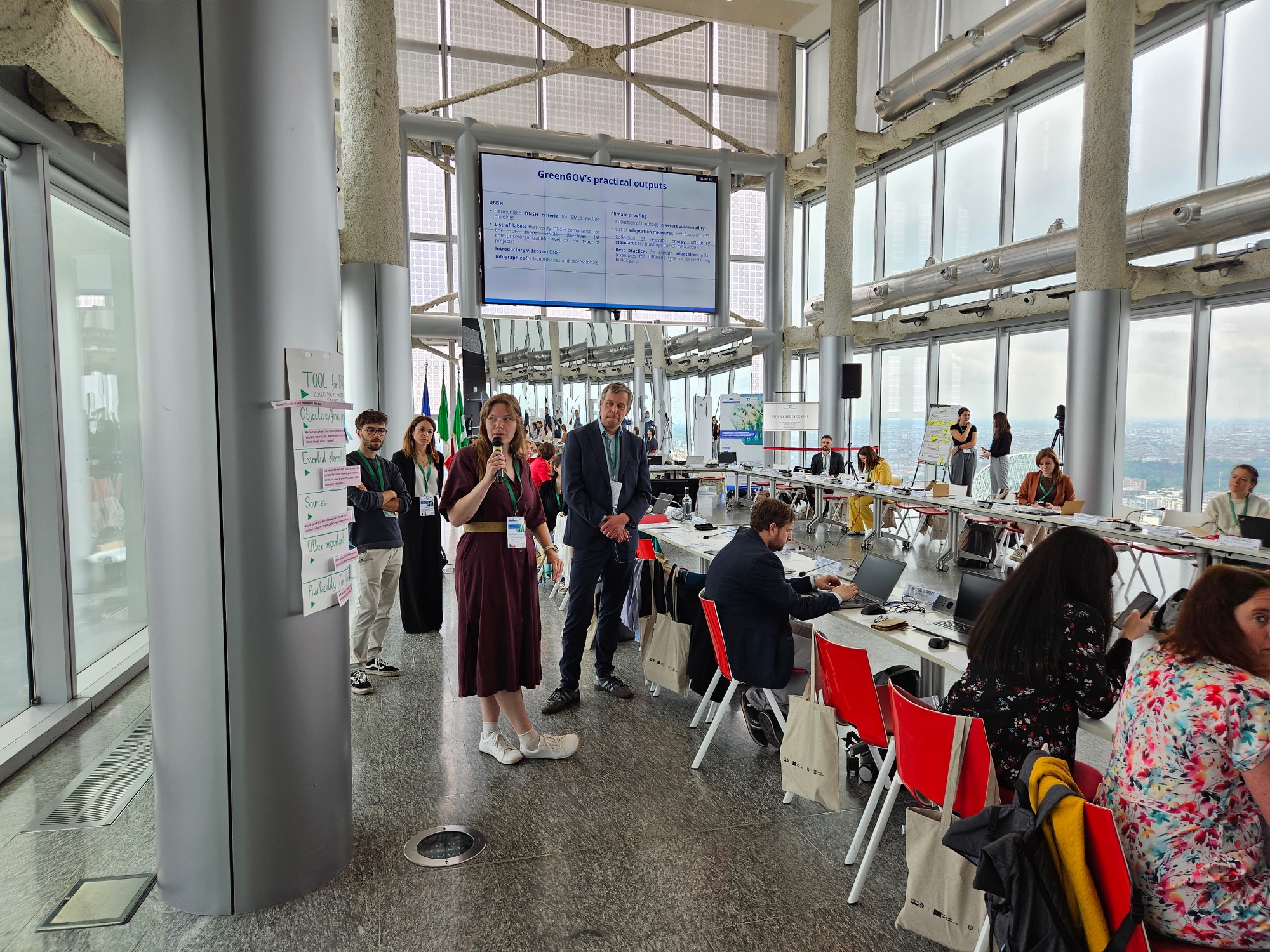
On May the 27th in Milan (Italy), during the 3rd Consortium Meeting, the Interreg Europe project GreenGov’s first thematic briefs were presented to the project partners. The briefs, covering the topics of Climate Proofing of infrastructures and DNSH principle, are now publicly available on the GreenGov website (Climate proofing, DNSH principle).
The briefs aim to provide an overview of the two topics that were the focus of the first year of the project, giving information on the regulatory framework they are in, the fundamental definitions needed to comprehend the topics, the challenges faced by regional and local authorities and the possible actions to take to tackle them.
The briefs are part of a broader set of capacity-building and technical support materials that is under development by the Greengov Project for local authorities and stakeholders.
Climate Proofing
Climate proofing integrates mitigation and adaptation measures into infrastructure planning and investment, ensuring projects both reduce greenhouse gas emissions and remain resilient to climate change impacts such as floods, heatwaves, storms, and sea-level rise. It is now a requirement for EU investments under key regulations including the Invest EU Regulation, the Recovery and Resilience Facility (RRF), and the Common Provision Regulation (CPR). The brief offers a comprehensive picture of the regulatory framework and of the two pillars of the CP process (mitigation and adaptation) and explains what is considered an infrastructure according to the European Commission's definition.
Key Highlights of the brief
- Regulatory framework within which climate proofing is applied;
- Two-pillar methodology for mitigation (emissions reduction) and adaptation (climate resilience), that consists of a screening phase as first step, and detailed assessment phase;
- Scope of application: from transport and ICT networks to water, energy, waste systems, buildings, and nature-based infrastructure;
- Challenges identified by the partnership in relation to the novelty of the procedure, such as limited awareness of the relevance of climate change impacts, technical complexity and lack of accessible climate data, shortage of skilled personnel and certified experts;
- Proposed actions to tackle the challenges, such as awareness campaigns, practical tools to be developed, professional training, certification pathways, and capacity building for public administrations, suggestions for governance improvement
DNSH principle
The DNSH principle, established under the EU Taxonomy Regulation, ensures that investments and public funding do not cause significant harm to environmental objectives such as climate change mitigation and adaptation, biodiversity protection, pollution prevention, sustainable use of water and the circular economy.
Since EU funds like the Recovery and Resilience Facility (RRF) and the European Structural and Investment (ESI) Funds require DNSH compliance in their 2021–2027 programmes, GreenGov aims to support public authorities, policy makers, and beneficiaries in turning this requirement into an opportunity for sustainable growth and competitiveness.
Key Highlights of the Brief
- Policy framework and fundamental definition for the concept of “significant harm”;
- Focus on the implementation of the principle in EU Funds as a “horizontal principle”;
- Challenges identified by the partnership in three main areas: awareness-raising, methodology, and governance. At a general level, the inconsistent implementation of the principle across Europe, and even within individual countries or among different funds, is highlighted, as is the lack of common guidelines and the requirement for a change in mindset and practice for both the managing authorities and beneficiaries;
- Proposed actions to address the challenges, such as tools for beneficiaries and policy recommendations for managing authorities.
For more information and to access the full thematic briefs, visit: https://www.interregeurope.eu/greengov
The GreenGov project is co-funded by the Interreg Europe programme.